

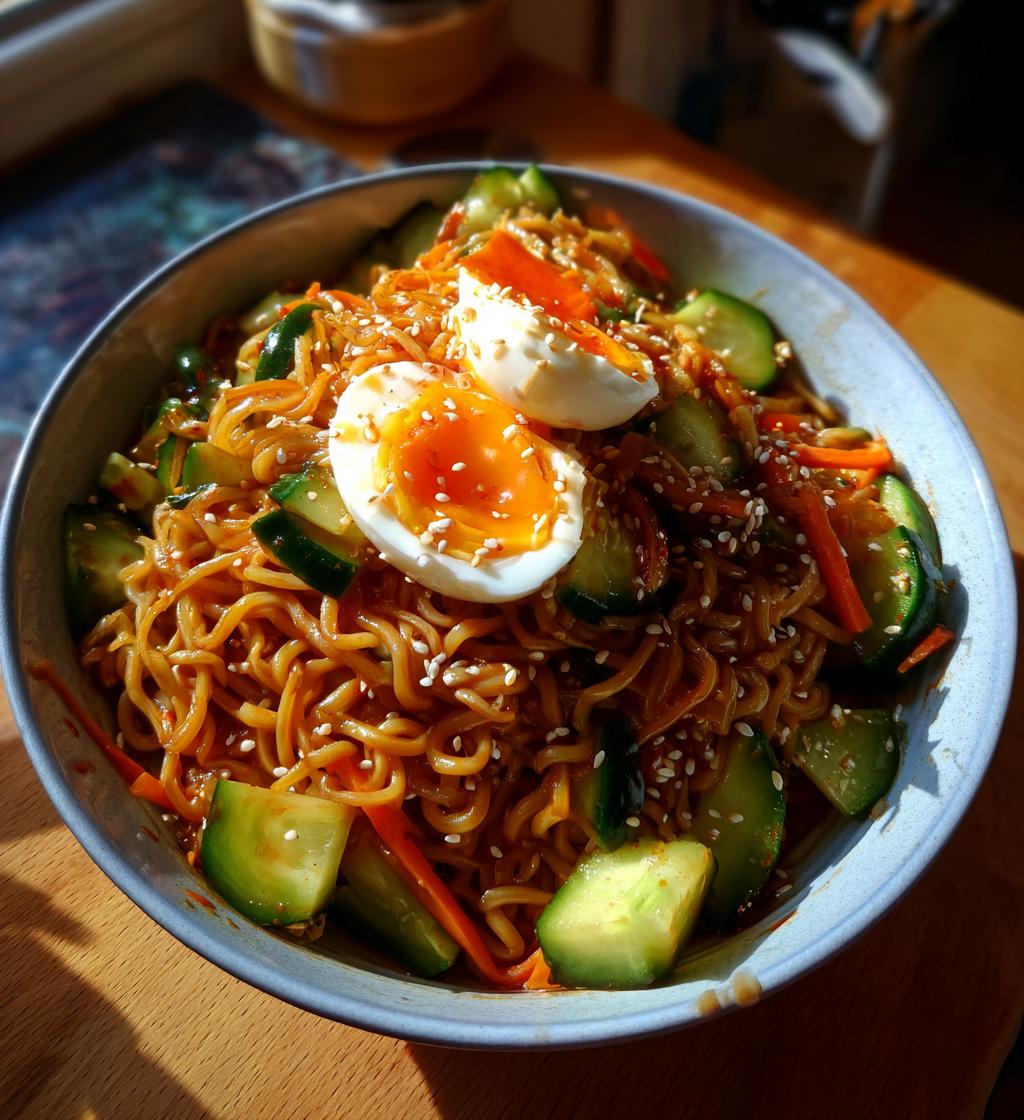
Bibimmyeon is a delightful Korean dish that captures the essence of summer with its refreshing cold noodles and bold flavors. This spicy noodle dish is a perfect balance of chewy noodles coated in a rich, spicy sauce made from gochujang, soy sauce, and sesame oil, all topped with vibrant, fresh vegetables. Not only is it a feast for the eyes, but it also offers a unique taste that embodies the heart of Korean cuisine.

What makes Bibimmyeon particularly appealing is its simplicity and speed of preparation. In just 15 minutes, you can whip up this delicious meal that’s perfect for a quick lunch or dinner on a hot day. Whether you’re a seasoned cook or just starting out in the kitchen, this dish is incredibly easy to make and can be customized to suit your taste preferences. Personally, I love how versatile Bibimmyeon is; I often find myself experimenting with different vegetables and spice levels, making each serving a new adventure. With its vibrant colors and harmonious flavors, Bibimmyeon is sure to become a favorite in your household.
Ingredients List
- 200g of Korean wheat noodles
- 1 tablespoon of gochujang (Korean chili paste)
- 1 tablespoon of soy sauce
- 1 tablespoon of sesame oil
- 1 tablespoon of sugar
- 1 cucumber, julienned
- 1 carrot, julienned
- 1 boiled egg, halved
- Sesame seeds for garnish
How to Prepare Bibimmyeon
Cooking the Noodles
To start your Bibimmyeon journey, begin by cooking the Korean wheat noodles. Bring a large pot of water to a rolling boil, ensuring you have enough water to allow the noodles to move freely. Add the 200g of Korean wheat noodles to the boiling water and cook them according to the package instructions, usually around 4 to 5 minutes. It’s crucial to stir the noodles occasionally to prevent them from sticking together. Once cooked, taste them to ensure they are al dente—firm but not hard. When they reach the desired texture, drain the noodles in a colander and rinse them under cold running water. This step not only stops the cooking process but also cools down the noodles, making them perfect for serving cold.
Making the Sauce
While the noodles are cooling, it’s time to prepare the sauce that will elevate your Bibimmyeon. In a medium bowl, combine 1 tablespoon of gochujang, 1 tablespoon of soy sauce, 1 tablespoon of sesame oil, and 1 tablespoon of sugar. Use a whisk or spoon to blend these ingredients together until smooth. Taste the sauce and adjust the spice level by adding more gochujang if you prefer a hotter kick, or add more sugar if you like it sweeter. The key is to find a balance that suits your palate. Once mixed, set the sauce aside to allow the flavors to meld while you prepare the rest of the dish.
Combining Ingredients
Now that your noodles and sauce are ready, it’s time to bring everything together. In a large mixing bowl, add the cooled noodles. Pour the prepared sauce over the noodles and gently toss them until they are evenly coated. This will ensure that every bite is packed with flavor. Next, take the julienned cucumber and carrot, and add them to the bowl, mixing gently to distribute the vegetables throughout the noodles. For an added touch of flavor and nutrition, you can include other vegetables like sliced radish or bell pepper at this stage. Finally, serve the Bibimmyeon in individual bowls, topping each serving with a halved boiled egg and a sprinkle of sesame seeds for a delightful finish. Enjoy your homemade Bibimmyeon as a satisfying meal on its own or alongside your favorite Korean side dishes!
Why You’ll Love This Recipe
- Quick Preparation: Bibimmyeon can be made in just 15 minutes, making it an ideal choice for busy weekdays or spontaneous meals.
- Refreshing Taste: The combination of cold noodles and a spicy, flavorful sauce creates a refreshing dish perfect for warm weather.
- Customizable Ingredients: You can easily modify the recipe by adding your favorite vegetables or adjusting the spice level to suit your taste.
- Healthy and Nutritious: Packed with fresh vegetables and low in calories, Bibimmyeon is a nutritious option that doesn’t compromise on flavor.
- Vegan-Friendly: This dish is naturally vegan, making it a great option for those following a plant-based diet.
- Authentic Korean Experience: Enjoy the taste of Korean cuisine right in your kitchen, bringing a cultural experience to your dining table.
🍴 Top Kitchen Essentials You’ll Love




Tips for Success
To make sure your Bibimmyeon turns out perfectly every time, keep these pro tips in mind:
Adjusting Spice Levels
If you’re sensitive to spice or cooking for someone who is, start with less gochujang and gradually increase it to taste. You can also balance the heat with a bit more sugar. Alternatively, for a milder flavor, consider using a mild chili paste or reducing the amount of gochujang altogether.
Perfecting Noodle Texture
For the best texture, ensure you don’t overcook the noodles. They should be al dente and chewy. Rinsing them under cold water not only stops the cooking process but also helps prevent them from sticking together. For an extra touch, you can toss the drained noodles with a little sesame oil before adding the sauce to enhance their flavor.
Enhancing Flavor with Toppings
Feel free to get creative with toppings! In addition to the boiled egg and sesame seeds, you can add sliced green onions, crushed peanuts, or even a sprinkle of nori for added depth. Fresh herbs like cilantro or mint can also elevate the dish.
Experimenting with Vegetables
Don’t hesitate to experiment with different vegetables! Besides cucumbers and carrots, you can include bell peppers, bean sprouts, or even pickled radish for an extra crunch. The more colorful your vegetable selection, the more visually appealing your Bibimmyeon will be.
Serving Suggestions
For an authentic Korean experience, serve Bibimmyeon with a side of kimchi. The spicy and tangy flavors of kimchi complement the noodles perfectly, creating a harmonious balance in your meal. Additionally, you can serve it alongside other Korean side dishes like kimbap or pickled vegetables for a complete dining experience.
Variations
Bibimmyeon is a wonderfully versatile dish that can easily adapt to your taste preferences and dietary needs. Here are some exciting variations to consider when preparing your own Bibimmyeon:
Different Vegetables
While the classic version features cucumber and carrot, feel free to get creative with your vegetable choices. Here are some suggestions:
- Bell Peppers: Thinly sliced bell peppers add a sweet crunch and vibrant color to your dish.
- Radish: Sliced or julienned radish provides a nice peppery bite that complements the noodles.
- Bean Sprouts: Adding fresh bean sprouts will give your Bibimmyeon an extra crunch.
- Spinach: Blanched spinach can be mixed in for additional nutrients and a pop of green.
Alternative Sauces
While the traditional sauce made from gochujang is delicious, you can experiment with different sauces to put your own spin on Bibimmyeon:
- Sesame Soy Sauce: For a nutty flavor, mix equal parts soy sauce and sesame oil with minced garlic and a touch of sugar.
- Spicy Peanut Sauce: Combine peanut butter with soy sauce, gochujang, lime juice, and a bit of honey for a creamy, spicy twist.
- Yuzu Dressing: For a citrusy flavor, try a dressing made with yuzu juice, soy sauce, and sesame oil.
Protein Additions
If you’re looking to add more protein to your Bibimmyeon, consider these options:
- Grilled Chicken: Sliced grilled chicken can transform your cold noodles into a heartier meal.
- Tofu: For a vegan option, add grilled or sautéed tofu for a protein boost.
- Seafood: Add shrimp or crab meat for a delicious seafood twist.
Encourage your creativity by trying out these variations while maintaining the essence of Bibimmyeon. The key is to keep the dish refreshing, spicy, and packed with flavor, no matter how you choose to customize it!
Nutritional Information
When preparing Bibimmyeon, you not only enjoy a delicious meal but also benefit from its nutritious components. Below is the estimated nutritional information for one serving of Bibimmyeon, based on typical ingredients:
- Calories: 350
- Total Fat: 10g
- Saturated Fat: 1g
- Unsaturated Fat: 9g
- Trans Fat: 0g
- Cholesterol: 70mg
- Sodium: 800mg
- Total Carbohydrates: 55g
- Dietary Fiber: 3g
- Sugars: 6g
- Protein: 12g
Please note that these values are estimates and can vary based on specific ingredient brands and preparation methods. Bibimmyeon is a balanced dish that offers a good mix of carbohydrates, proteins, and healthy fats, making it a satisfying and nutritious choice for any meal.
FAQ Section
What If My Bibimmyeon Doesn’t Turn Out Right?
If your Bibimmyeon doesn’t turn out as expected, don’t worry! There are a few common issues and their solutions. If the noodles are too mushy, it may be due to overcooking. Next time, make sure to cook them just until al dente. If the sauce is too spicy, you can balance it out with a bit more sugar or add extra vegetables to dilute the heat. On the other hand, if the sauce lacks flavor, try adjusting the gochujang or soy sauce levels to your taste. Remember, cooking is all about experimenting and finding the perfect balance for your palate!
Can I Prepare This in Advance?
Absolutely! Bibimmyeon can be prepared in advance and stored in the refrigerator for up to two days. To do this, cook the noodles and prepare the sauce as directed. Keep the noodles and sauce separate until you’re ready to serve to ensure the noodles remain firm and do not become soggy. When ready to eat, simply toss the noodles with the sauce and add your fresh vegetables. This makes it a convenient option for meal prep or a quick lunch.
What Ingredients Can I Swap?
There are plenty of ingredient substitutions you can make when preparing Bibimmyeon! If you have dietary restrictions or preferences, consider these swaps:
- Noodles: You can use gluten-free noodles or even spiralized zucchini for a low-carb version.
- Gochujang: If you can’t find gochujang, a combination of miso paste and chili powder can be used as an alternative.
- Vegetables: Feel free to use any vegetables you have on hand, such as shredded cabbage, snap peas, or radishes.
- Protein: For a protein boost, consider adding shredded chicken, tofu, or shrimp.
These substitutions will help you tailor the dish to your taste while keeping the essence of Bibimmyeon intact!
Serving Suggestions
Bibimmyeon is a versatile dish that can be enjoyed on its own or paired with a variety of side dishes to elevate your meal experience. Here are some excellent serving suggestions:
Kimchi
Kimchi is a traditional Korean side dish made from fermented vegetables, most commonly napa cabbage and radishes, seasoned with chili pepper, garlic, and ginger. The tangy and spicy flavors of kimchi complement the refreshing and spicy notes of Bibimmyeon perfectly, creating a harmonious balance in your meal. Additionally, you can serve it alongside other Korean side dishes like pickled vegetables for a complete dining experience.
Side Salad
A light and crisp side salad can balance the richness of the Bibimmyeon sauce. Consider a simple salad made with mixed greens, cherry tomatoes, and a sesame dressing. The freshness of the salad will enhance the overall meal and provide a nice contrast to the chewy noodles.
Pickled Vegetables
Serving a variety of pickled vegetables, such as pickled radish or cucumbers, can add a delightful crunch and acidity to your meal. These pickles not only complement the flavors of Bibimmyeon but also offer a refreshing bite that can cleanse the palate between bites of the spicy noodles.
Rice Dishes
If you’re looking for a heartier meal, consider serving Bibimmyeon alongside a small serving of steamed rice or fried rice. The rice provides a neutral base that balances the flavors of the noodles while adding more substance to your meal.
Sundubu Jjigae (Soft Tofu Stew)
For a comforting and filling meal, pair Bibimmyeon with a bowl of Sundubu Jjigae, a spicy soft tofu stew. The rich, warm flavors of the stew contrast beautifully with the cold noodles, creating a satisfying and diverse dining experience that showcases the best of Korean cuisine.
Whether you choose to enjoy your Bibimmyeon alone or with these delicious side dishes, you’re sure to have a delightful meal that celebrates the vibrant flavors of Korean food!
Print
Bibimmyeon
- Total Time: 15 minutes
- Yield: 2 servings 1x
- Diet: Vegan
Description
Bibimmyeon is a spicy Korean cold noodle dish that combines chewy noodles with a flavorful sauce and fresh vegetables.
Ingredients
- 200g of Korean wheat noodles
- 1 tablespoon of gochujang (Korean chili paste)
- 1 tablespoon of soy sauce
- 1 tablespoon of sesame oil
- 1 tablespoon of sugar
- 1 cucumber, julienned
- 1 carrot, julienned
- 1 boiled egg, halved
- Sesame seeds for garnish
Instructions
- Cook the noodles according to package instructions.
- Drain the noodles and rinse them under cold water until cool.
- In a bowl, mix gochujang, soy sauce, sesame oil, and sugar to make the sauce.
- Toss the cooled noodles with the sauce until evenly coated.
- Add the cucumber and carrot, mixing well.
- Serve the noodles in a bowl, topped with the boiled egg and sesame seeds.
🍴 Top Kitchen Essentials You’ll Love
Notes
- Adjust the spiciness by adding more or less gochujang.
- You can add other vegetables like radish or bell pepper.
- Serve with kimchi for extra flavor.
- Prep Time: 10 minutes
- Cook Time: 5 minutes
- Category: Main Dish
- Method: Boiling and Mixing
- Cuisine: Korean
Nutrition
- Serving Size: 1 serving
- Calories: 350
- Sugar: 6g
- Sodium: 800mg
- Fat: 10g
- Saturated Fat: 1g
- Unsaturated Fat: 9g
- Trans Fat: 0g
- Carbohydrates: 55g
- Fiber: 3g
- Protein: 12g
- Cholesterol: 70mg
Keywords: Korean noodles, cold noodles, spicy noodles